
Most people dump all the pieces out and just start grabbing. That works, sort of. But if you want to actually enjoy the process and finish faster, sorting matters. Learning how to sort jigsaw puzzle pieces is the single biggest jump most players ever make.
Here’s the system:
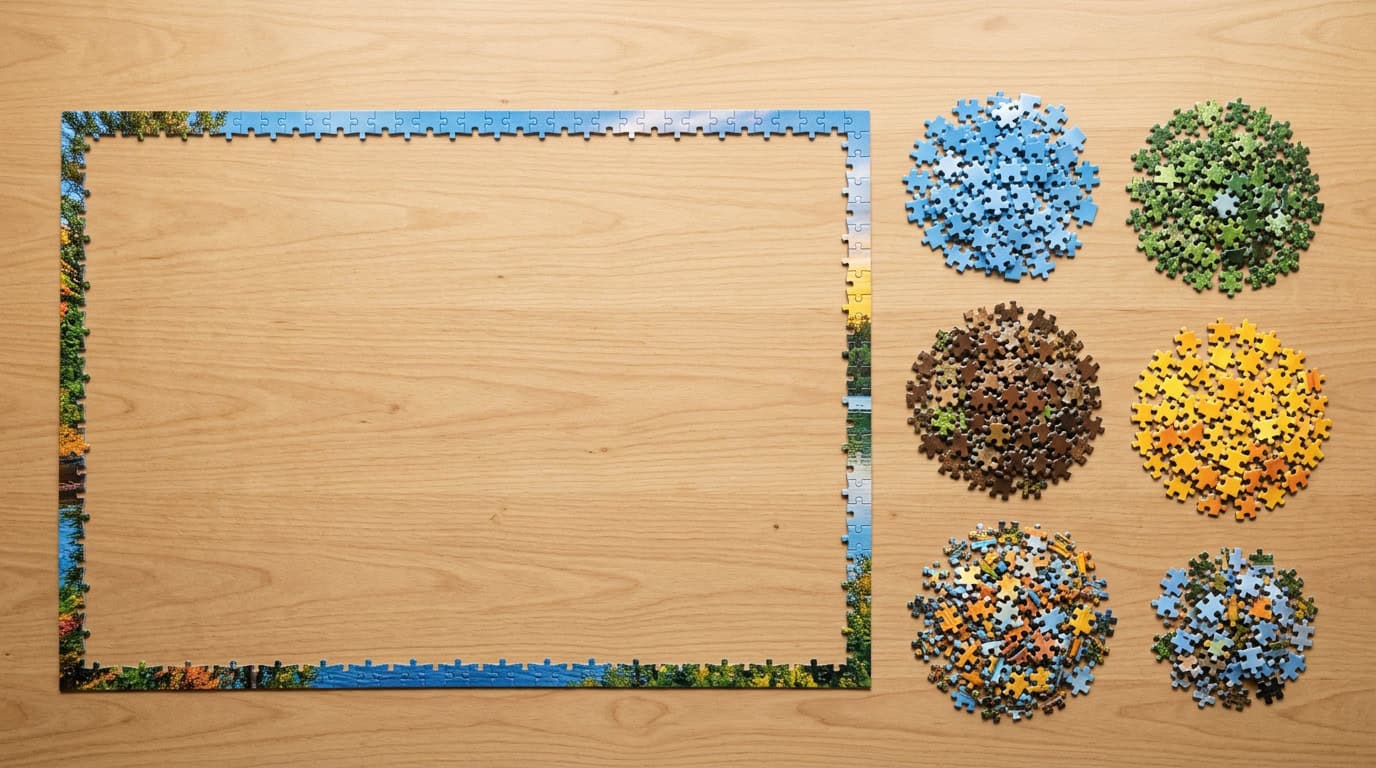
Start with the edges
Find every piece with a flat side. These are your border pieces. Set them aside and build the frame first. It gives you a defined workspace and an immediate sense of progress. That momentum matters more than you think, especially on a bigger puzzle.
Group by color
Look at the image you’re building and identify the main color zones. Blues together. Browns together. Greens together. You don’t need to be perfect about it. Close enough is good enough at this stage. The point is to shrink the pile you’re searching through every time you reach for a piece.
Look for patterns and texture
Color alone won’t always save you. A blue sky and a blue ocean look identical until you notice the texture difference. Sky tends to be smooth with soft gradients. Water has ripples, highlights, and hard edges. Train your eye to look at surface detail, not just color, and a whole category of frustration disappears.
Sort by shape when you’re stuck
Jigsaw pieces come in a handful of basic shapes built from tabs and blanks in different combinations. Two tabs and two blanks. Three tabs and one blank. All four tabs. When color fails you, sorting by shape can unlock a section you’ve been staring at for ten minutes.
Start with the obvious sections
Got a bright red barn or a bright yellow sun in the puzzle? Do that first. High contrast, distinctive sections are easy wins, and every completed section gives you edges to build against. Save the plain sky or the flat background for last, when you’ve got context surrounding it on three sides.
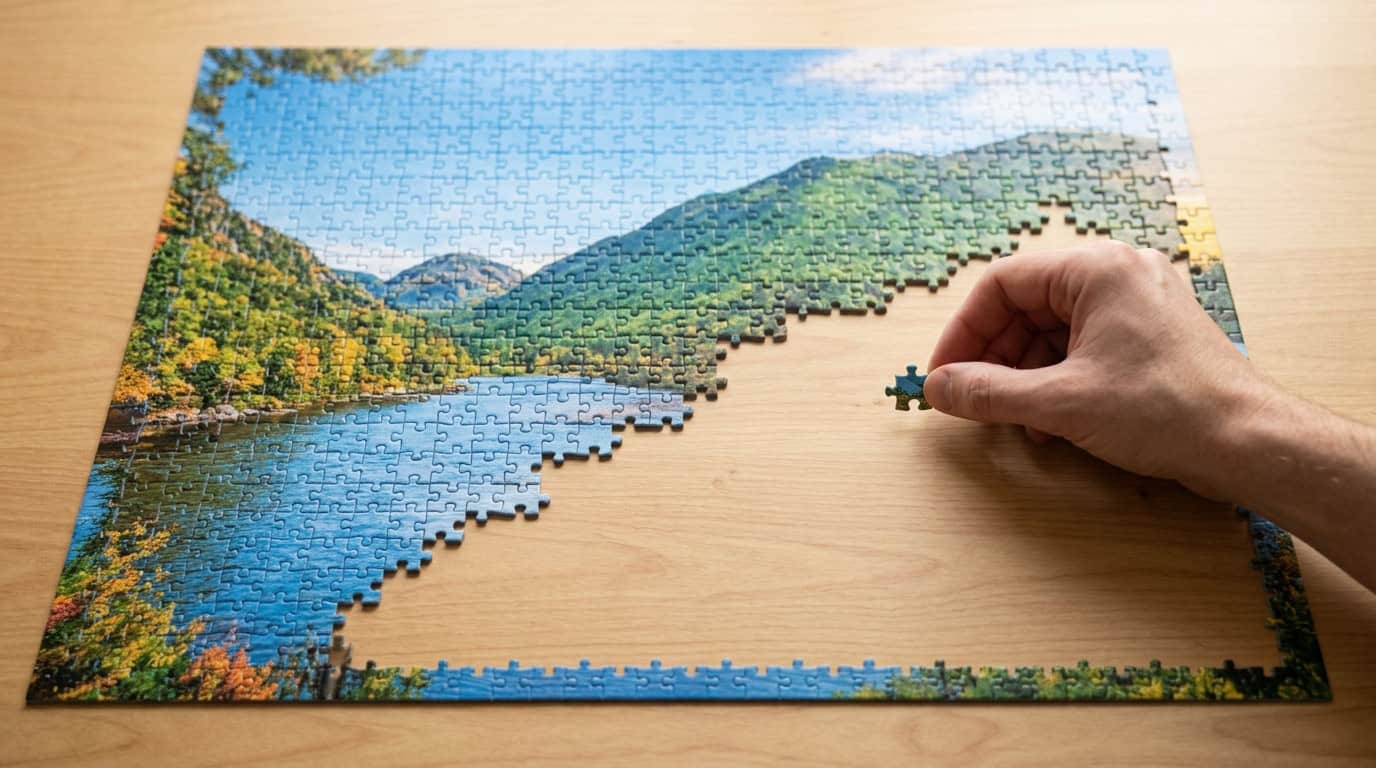
Work outward, not randomly
Once a section is done, build off it. Random placement attempts burn time. Anchored placement attempts almost always land. This one habit will cut your solve time more than anything else on this list.
There’s a reason sorting feels good
Here’s something worth knowing. That focus you fall into while sorting pieces by color and shape isn’t just pleasant, it’s your brain doing real work. The pattern recognition and spatial reasoning a puzzle demands are exactly the abilities researchers have studied for cognitive health. A University of Ulm study looked at what solving jigsaw puzzles does for visuospatial thinking, the same mental muscle you’re using every time you tell a sky piece from an ocean piece. So the next time someone gives you grief for spending an hour on a puzzle, tell them you’re training your brain.
Playing online? The same rules apply
At The Jig Zone you can play free online jigsaw puzzles right in your browser with no downloads and no signups. The sorting strategy is identical whether you’re dragging pieces on a screen or across a table. Start with edges. Work the distinct sections. Build outward.
Pick a puzzle and see how much your time improves once you’re working with a system instead of guessing.